Sql Server Foreign Key On Update Cascade
If you have defined the foreign key constraints as on update cascade then the primary key value that was changed should cascade down to all the foreign keys with that constraint. if you do not have the on update cascade constraint, then you will need create scripts to complete the update.. But, you can also cascade the actions using foreign key constraints. this is generally not used due to the fact that it is transparent, and leads to *mysterious* results. how to cascade updates and deletes to related tables. august 8, sql server – how to get last access/update time for a table; sql server – displaying line numbers. Foreign key constraints are an integral part of sql server database design. these are used to maintain integrity among related data in different tables. while implementing update and delete operations on values in the parent table (referenced table with primary key) we have to consider the impact on related values in the child table..
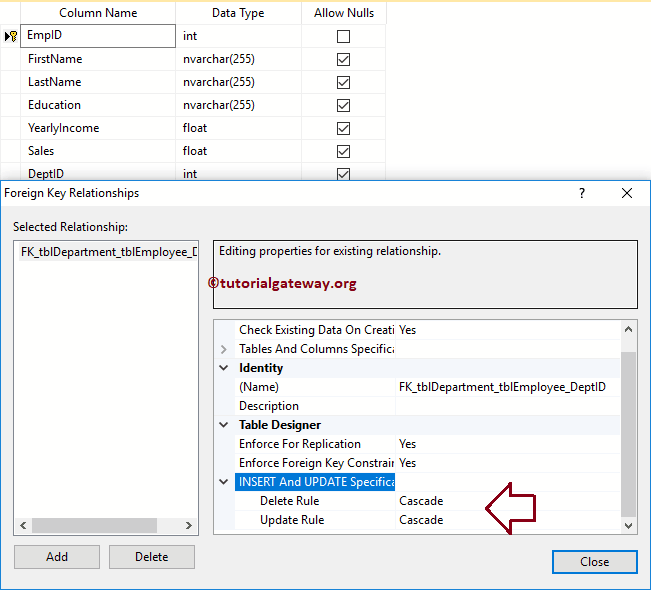
If update cascading settings is used, when we update the value in referenced table , it will also update the value in parent table (foreign key table) column. link to scripts used in sql server. Modify foreign key relationships. 07/25/2017; 4 minutes to read contributors. in this article applies to: sql server (starting with 2016) azure sql database azure sql data warehouse parallel data warehouse . you can modify the foreign key side of a relationship in sql server 2017 by using sql server management studio or transact-sql.. Bad setup. you have applied with nocheck to disable fk validation and maintenance; sample data demonstrate a stillborn "integrity". if you set with check option - each fk creation would fails with; the alter table statement conflicted with the foreign key constraint "b2f"..

